
Will the Real Cleopatra Please Stand Up?: Part III
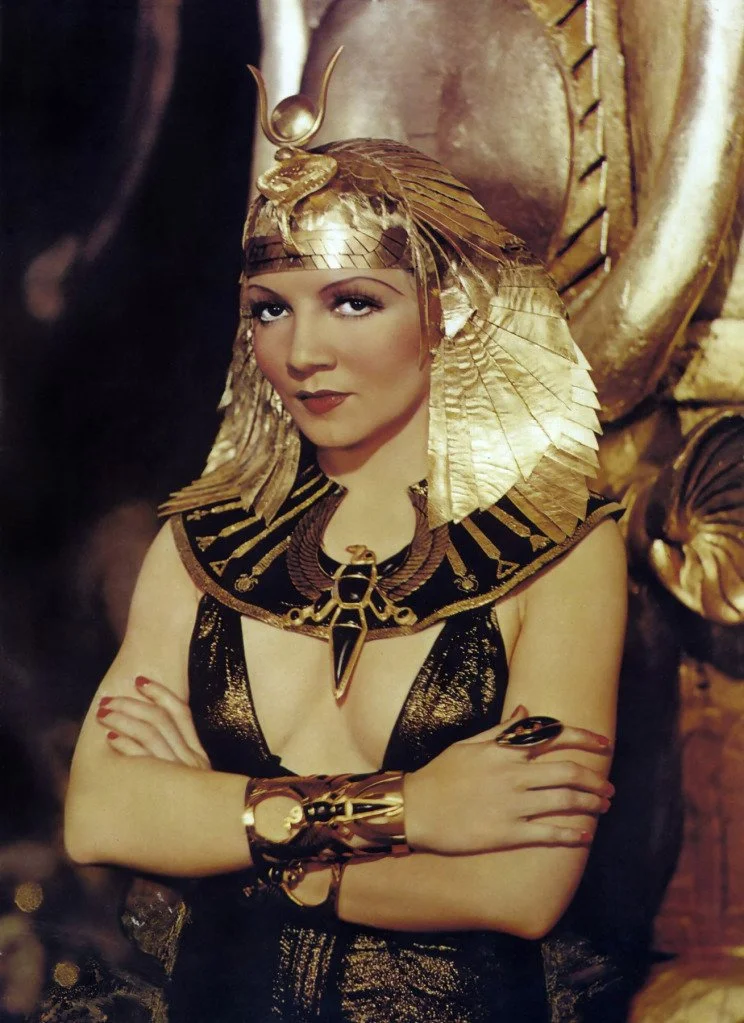
Publicity photo of Claudette Colbert by Paramount studio; public domain.
Claudette Colbert starred in the 1924 film Cleopatra. Her fashion designs touched a nerve in the American public. Her green silk gown in the last scene blew film-goers’ minds and set a trend for deco-style clothing in the States.
What does this have to do with the real Cleopatra? Historically speaking, nothing; imaginatively speaking, everything. The great queen lives in our imaginations. You can like her, you can hate her, but you cannot turn your eyes away from her.
But I digress.
We are here to talk about the tomb of Cleopatra.
Ancient texts say that she built a two-story mausoleum in the year or so before Octavian's forces entered Alexandria. Then she and two handmaidens entered the tomb and committed suicide as Octavian's army stormed the city.
A wonderful story and a magnificent ending.
But is it accurate? I think not.
Think for a moment. The mausoleum described by Plutarch was two stories high, and magnificent in its furnishings. All well and good. Cleopatra was a patron of the arts at the time and would certainly have her final resting place created in magnificence.
Centuries later, we would expect nothing less.
But Plutarch was writing a century later. I doubt if he ever saw this magnificent tomb.
So, where is this magnificent structure? As Hamlet once said, "Aye, there's the rub." We know that she committed suicide, but we don't know how. The story that she was bitten by an asp is problematic: Egyptian asps are a species of cobra, and they are over five feet in length when full grown. The story that an asp was smuggled into the mausoleum, past Octavian's guards, is implausible on its face. It is a myth that connects Cleopatra with much older deities.
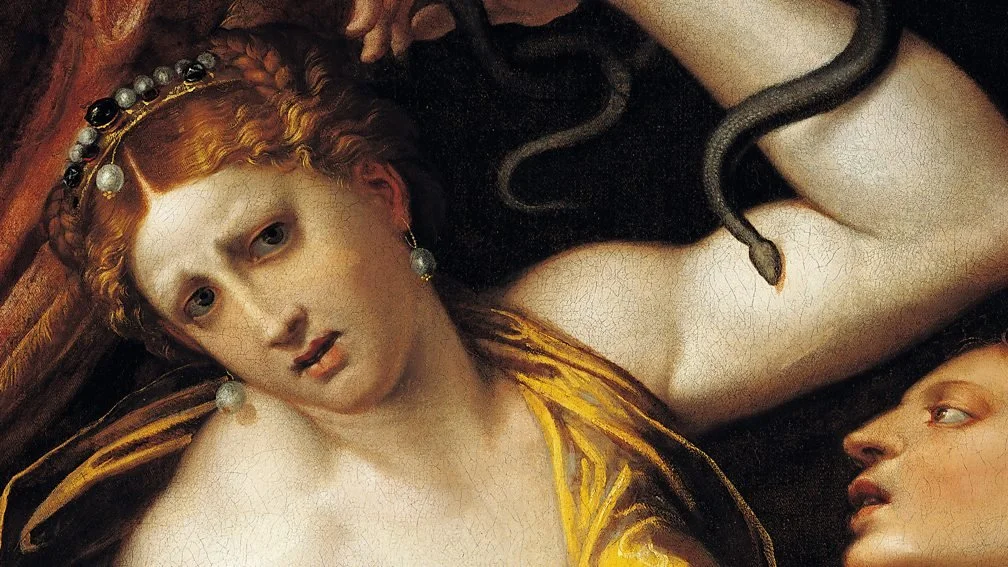
Cleopatra with the Asp (DeAgostini/Getty Images)
In my book, The Cleopatra Caper, the young detectives decided to report failure, to tell the world that the tomb didn't exist. That's what I would have done, and for the simple reason that I don't want this legend reduced to a shriveled mummy in some museum. Now, as far as legends go, I suspect that the real Cleopatra was much closer to Sofia in The Penguin than to Elizabeth Taylor.
It is possible that the real tomb is out there somewhere. If I had to guess, I would pick a location close to Cleopatra's former palace at Alexandria, but that's just me. There is no reason to believe that the Romans would have entombed her near Alexandria. Arguably, if they followed Egyptian royal custom, they would have taken the bodies of Cleopatra and Anthony some distance. Remember, the Valley of the Kings with all its royal tombs is far to the north of Memphis, the ancient capital.
Then there is also the distinct possibility that Octavian destroyed the bodies and fabricated stories of the twin suicides and a hidden tomb, lost to the eyes of men. That would have solved the problem of any opposition using the remains as symbols of resistance.
So where are we left?
A mythological queen and a tomb lost in time. I think that's quite enough magic and mystery for everybody.
Any thoughts?
