
Secrets of The Student – Part II: The Tango Motif
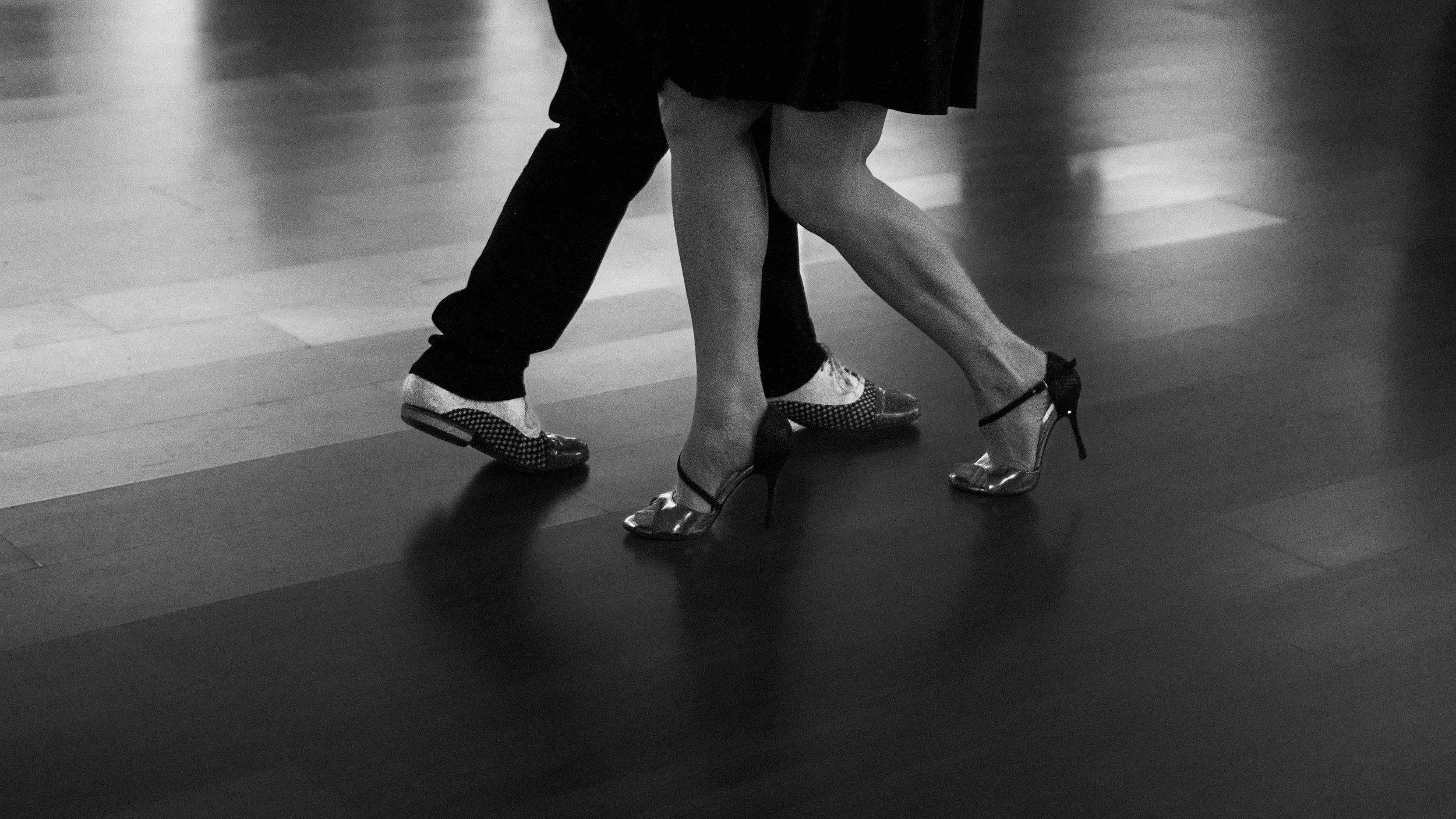
If there were a musical score to the Petrie and Pettigrew series, it would be a tango. That mysterious dance, at once sexually alluring and classically elegant, runs through the series. Tango music is driven by themes of lost love, broken hearts, and loss of innocence—and perfectly expresses the same themes in my writing.
So, how did tango get into an updated Conan Doyle-style British detective story?
I cannot imagine either Sherlock or Watson tangoing in a cabaret—and I don't think you can, either.
But you can see Flinders tangoing about the American Bar in Cairo, because that's who he is: a man polished to the Nth degree. And tango dancing would have been something he would do.
But is that possible?
Tango emerges as a popular dance in Argentina in the early 1880s, and possibly a decade before, brought there by waves of European—mostly Italian—immigrants. Meaning that tango was danced in Europe before that time. My guess is that the dance originated in Italy and then morphed into the Argentine version. Flinders’ father made him take dance lessons, and tango could easily have been part of that instruction. At any rate, by 1885, the date of the Wolsey expedition that takes place as the detectives leave Egypt, tango could have been played in the Shepherd Hotel's American bar, and Flinders could have danced it there.
But the tango motif really begins in The Student, and then flashes back to Cairo of the late 1800s. The student and Samira decide to go to a nightclub. Since they are having an illicit affair, they cannot be seen together: Samira goes with her brother, and the student cajoles Rosemary, another student, to go with him. They go to the Scheherazade Club (the same club where Pettigrew and Sarni found ill-fated love in The Cleopatra Caper) to dance in private, since Muslim mores forbid men and women from dancing together in public. But even there, they cannot be together.
The music begins, and both couples take the floor. The lovers make eye contact. Then magic happens: the student imagines that he is dancing with Samira; he whirls her around the floor in a series of intricate tango steps. They are together, and the outside world disappears. Finally, the music ends, and sad reality returns. But something has happened. Rosemary tells the student that she has never experienced such intensity before, little knowing that it was meant for Samira.
This is one of my favorite scenes: Dancing with an imaginary lover conveys the essence of tango.
I got the idea for the tango scene from watching Scent of a Woman. I actually get most of my ideas from movies. Sorry, nobody is perfect. The idea of a tango scene to juice up an otherwise nondescript love affair seemed to hit the spot. The problem, of course, was that the lovers couldn't dance with each other. After a lot of soul-searching, I decided to have the student dance with Samira in his imagination. I think it worked; the scene expresses both the longing and the sense of hopelessness that both student and Samira felt, since both knew they could never be together.
And tango, rather than some other dance (possibly waltz), perfectly expresses those feelings. Tango, as any tanguero will immediately tell you, is more than just a dance; it is a way of life. When a tango dancer dances, he or she expresses that their life experience. An instructor once told me that she had gone to Argentina and danced with men who had suffered under the military junta. Their dancing was quite different, she said. "You could feel that suffering."
For those of you who would like to get a feel of tango, let me recommend a movie: The Tango Lesson is a cult classic, both here in the US and in Argentina. The instructor, Pablo Veron, is the real McCoy.
But tango also defines an era from, say, 1910 to World War II. The popular image of tango was initially dominated by Rudolf Valentino. Valentino was an Italian immigrant who became a taxi dancer (women bought tickets to dance with him) in New York before he moved to Hollywood. The Four Horsemen of the Apocalypse and The Sheikh made him a superstar. If you want to see how he danced tango, search for the tavern scene from The Four Horsemen. Valentino danced tango viejo, “old tango,” and he was very, very good.
Tango became immensely popular in the US and Europe. Couples swirled to the strains of tango music in weekend tea dances. They danced to tango music performed by small western ensembles in the elegant confines of hotel ballrooms, surrounded by palm trees and tables covered with white linen and set with silver and crystal. A softer era that has long since passed. If you want to hear what these dances sounded like, search for The Tango Project, volume one.
I merged the personas of Flinders and Valentino: like Valentino, Flinders was very much the dashing, elegant, and irresistible “ladies' man.” Both of them, Valentino in The Horsemen and Flinders in Goddess find themselves in worlds descending into chaos.
At the end of Goddess, he tells Pettigrew that he wants to go to Hollywood to star in a movie about a shaykh in the desert, well before Valentino's 1921 film. Pettigrew (wrongly) dismisses the idea of a movie about Shaykhs as pure fantasy. When he returns years later from Baghdad in Bones of the Apostle, Flinders again tells Pettigrew that he wants to star as a shaykh in white robes and dance tango wearing a broad hat and carrying a whip. Pettigrew politely reminds him that shaykhs do not wear broad hats or carry whips.
But Flinders’ sense of the defining mood of the times was correct. Tango swept America and especially Hollywood. Take a look at Sunset Boulevard: Norma Desmond, the aging film actress, teaches her young lover "fancy tango steps" that she remembers when she was the toast of silent films. He thinks that she is just imagining forgotten foolishness, but he is wrong.
The elegance of tango mirrored the elegance of the silver screen.
But then the world changed for the worse. There are some old Polish recordings from the 1930s, scratchy and often indistinct; the pace is slower and more melodic than their Argentine counterparts. They are heartbreaking to listen to: It was as though the singers and dancers knew what would happen to them when the Germans marched in.
The rest is grim history.
